The recent incident of the US sinking an Iranian warship has sent shockwaves through the international community. The Indian Navy’s involvement as mere “guests” in the conflict has raised eyebrows and sparked concerns about escalating tensions in the region. Amidst the chaos, Iranian regime official Araghchi has issued his first reaction, further aggravating the situation as Shia faction’s anger reaches new heights.
The US military’s decision to take down an Iranian warship marks a significant escalation in the ongoing conflict between the two nations. The precise circumstances leading to this drastic action remain unclear, but it is evident that this move has profound implications for the geopolitical landscape in the Middle East and beyond.
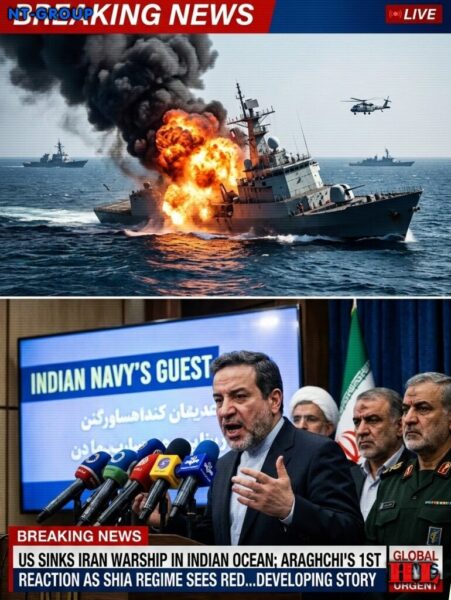
The Indian Navy’s role as a “guest” in this conflict raises questions about the extent of their involvement and the implications for India’s strategic relationships in the region. As a key player in the Indian Ocean region, India’s actions and alliances are closely watched by global powers, and its proximity to the conflict between the US and Iran introduces a new dimension to the already complex situation.
Meanwhile, Araghchi’s initial response to the sinking of the Iranian warship has added fuel to the fire. As a prominent figure in the Shia regime, his words carry weight and could potentially inflame tensions further. The reaction from Tehran and its allies could shape the course of future developments in the region, with the potential for further escalations and retaliations.
As the situation continues to unfold, the international community is closely monitoring the events and assessing the potential impact on regional stability. The US-Iran standoff has been a long-standing source of tension, and the sinking of the warship represents a dangerous escalation that could have far-reaching consequences.
In conclusion, the sinking of an Iranian warship by the US military, the Indian Navy’s role as bystanders in the conflict, and Araghchi’s initial reaction have all contributed to a volatile and uncertain situation in the Middle East. The stakes are high, and the need for diplomatic engagement and de-escalation is more crucial than ever to prevent further escalation of hostilities and preserve peace in the region.